🍽️
Prep time15 mins
Cook time20 mins
Ingredients15
breakfasteasy
Kuku Sabzi (Persian Herb Frittata)
Published: Oct 13, 2026
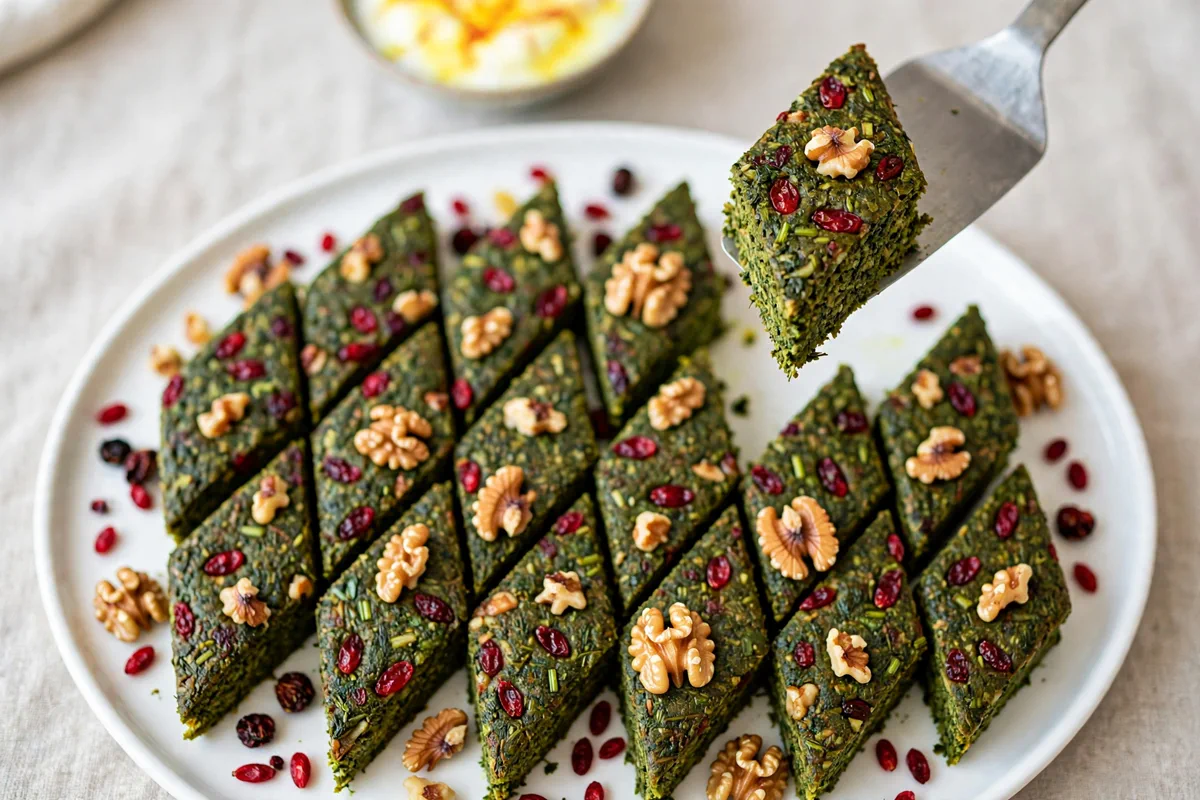
Kuku sabzi flips the frittata ratio: it is mostly fresh herbs held together with just enough egg, studded with tart barberries and crunchy walnuts. Deep green, savory, and ready in about 35 minutes.
Kuku sabzi flips the frittata ratio: it is mostly fresh herbs held together with just enough egg, studded with tart barberries and crunchy walnuts. Deep green, savory, and ready in about 35 minutes.
If you are looking for an ultra-satisfying, restaurant-quality meal that comes together with minimal effort, this Kuku Sabzi (Persian Herb Frittata) is about to become your new favorite. Everything is cooked to juicy, golden perfection with wholesome ingredients and incredible depth of flavor.
One simple tip!
Dry herbs are the whole game. Wet herbs steam instead of fry, and the kuku turns soggy. Spin them dry, then pat with a towel for good measure.
Step-by-Step Photos
Why You’ll Love This Recipe
Quick & EffortlessReady in just 35 minutes total with straightforward, foolproof prep.
Packed with Deep FlavorCarefully balanced with Flat-Leaf Parsley, Fresh Cilantro, Fresh Dill for maximum satisfaction.
Family & Crowd FriendlyMakes 6 generous servings that can be effortlessly doubled or scaled using our smart scaler.
Nutritious & High ProteinProvides 9g protein and only 205 calories per serving.
Ingredients Notes & Variations
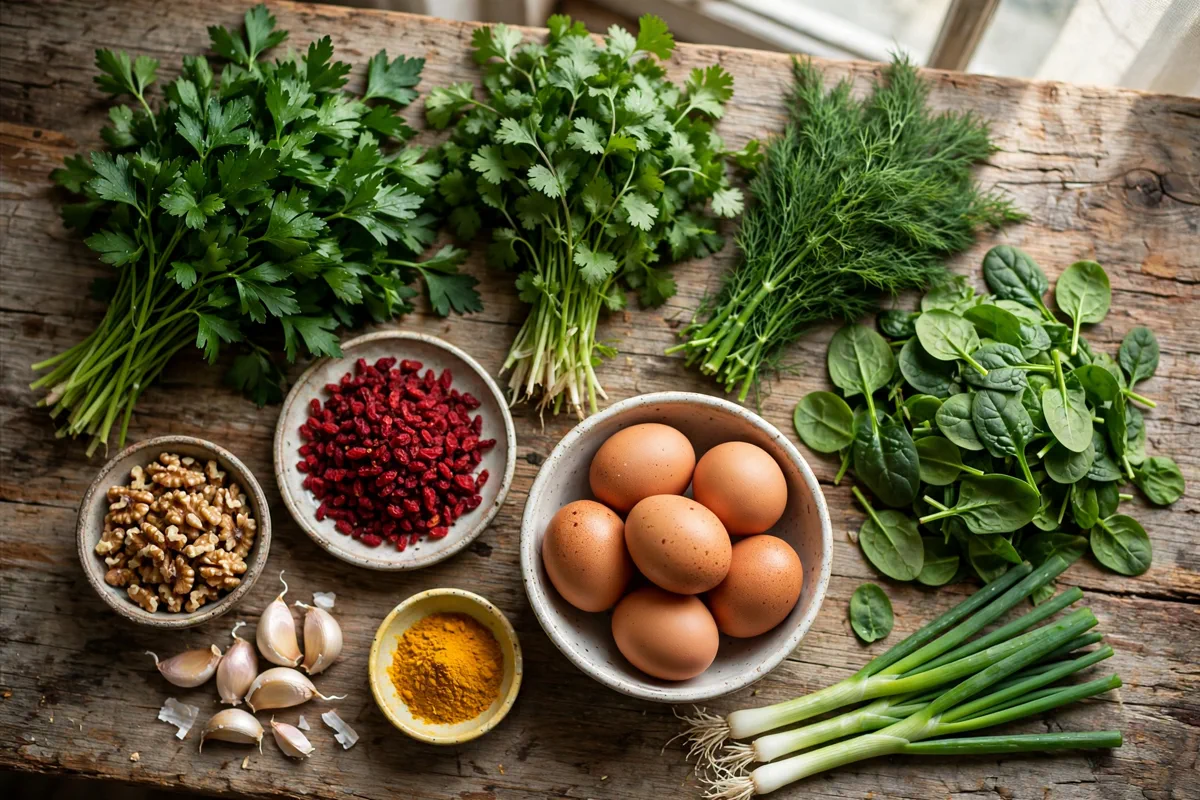
Here is an overview of what you will need for this recipe. Be sure to scroll down to the printable recipe card below for exact scaled measurements!
Flat-Leaf Parsley
2 cupfinely chopped, packed, stems removed
Fresh Cilantro
1.5 cupfinely chopped, packed, stems removed
Fresh Dill
1 cupfinely chopped, packed
Baby Spinach
1 cupfinely chopped, packed
Green Onions
0.5 cupthinly sliced, green and white parts
Large Eggs
6 pieceroom temperature
All-Purpose Flour
2 tbspuse rice flour to keep it gluten-free
Baking Powder
0.5 tspGround Turmeric
1 tspDried Barberries
3 tbspzereshk, rinsed and patted dry
Raw Walnuts
40 groughly chopped, about 1/3 cup
Garlic
1 piecegrated, 1 clove
Fine Sea Salt
0.75 tspBlack Pepper
0.25 tspfreshly ground
Neutral Oil
3 tbspavocado or light olive oil, for the pan
How to Make (Step-by-Step Overview)
Here is a quick summary of the preparation process. Detailed cooking temperatures and step timers are included in the recipe card below.
1
Wash the parsley, cilantro, dill, and spinach, then spin or pat them completely dry. Chop everything finely until you have a dense pile of herbs.
Look for: The herbs should look like a damp, even confetti, not wet clumps.
2
Whisk the eggs in a large bowl until the yolks and whites are fully combined and slightly frothy.
Look for: No streaks of white should remain.
3
Whisk the flour, baking powder, turmeric, salt, and pepper into the eggs until smooth.
Look for: The batter turns a pale gold color.
4
Fold in the chopped herbs, green onions, garlic, barberries, and walnuts. Stir until every leaf is coated in egg.
Look for: The mixture should be thick and spoonable, like a very leafy batter.
5
Heat the oil in a 10-inch oven-safe skillet over medium heat until it shimmers.
Look for: A drop of batter should sizzle on contact.
6
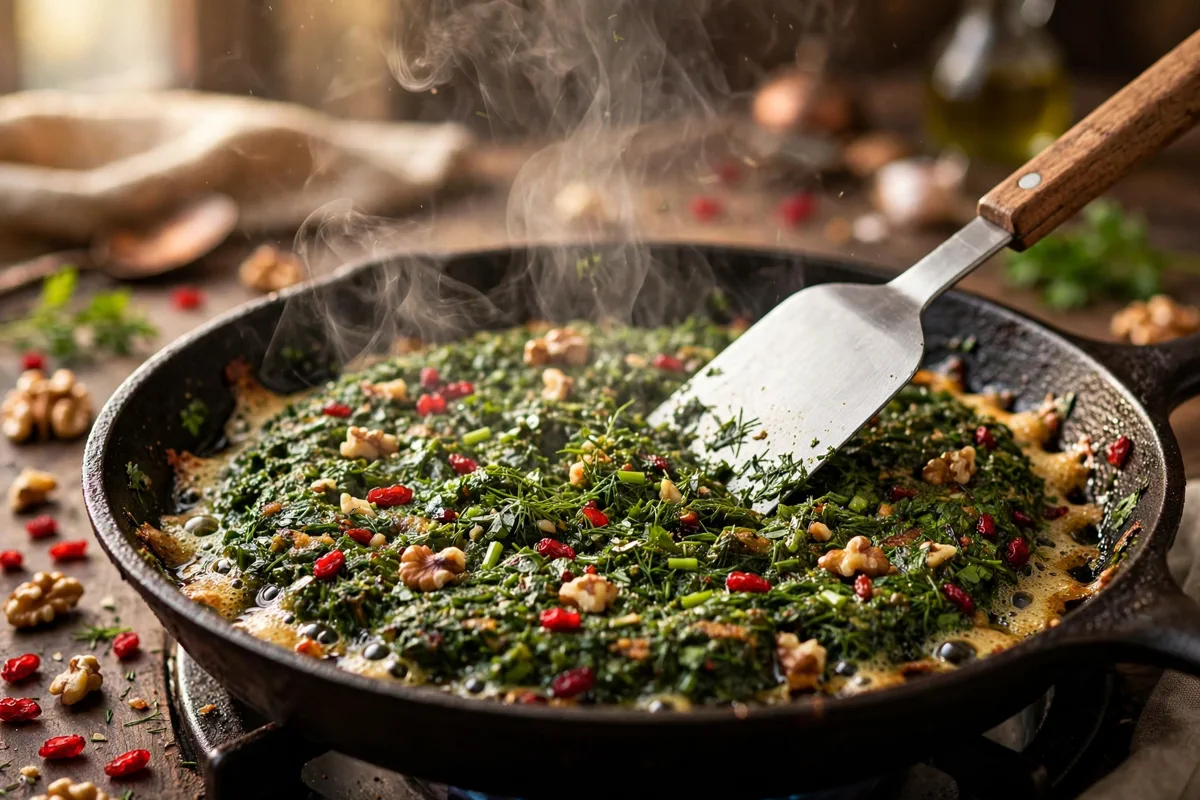
Spread the herb mixture into the skillet in an even layer and press it down gently with a spatula. Reduce the heat to medium-low, cover, and cook for 10 minutes.
Look for: Listen for a steady, gentle sizzle. If it goes quiet, the heat is too low; if it roars, turn it down.
7
Slide the skillet under the broiler for 3 to 4 minutes, until the top is set and lightly golden in spots.
Look for: The top should look matte, not shiny, and feel firm when pressed with a fingertip.
8
Let the kuku rest in the pan for 5 minutes, then slide it onto a board and cut into wedges or diamonds.
Look for: The cut edges should hold their shape and show a dense green interior.
Our Pro Tips for Success
- •Dry herbs are the whole game. Wet herbs steam instead of fry, and the kuku turns soggy. Spin them dry, then pat with a towel for good measure.
- •Chop the herbs by hand rather than in a food processor. The processor bruises the leaves and turns the mix into a paste.
- •If you do not have a broiler-safe skillet, flip the kuku instead: slide it onto a plate, invert the skillet over the plate, flip, and cook the second side 3 minutes.
- •Barberries are very tart, which is the point. If yours taste dusty, rinse them in a sieve and pat dry before adding.
Storage & Make-Ahead Instructions
Refrigerator:Store leftovers in an airtight container for up to 3 to 4 days.
Freezer:Freeze in freezer-safe containers or bags for up to 2 months. Thaw overnight in the fridge.
Reheating:Reheat gently in a 350°F oven or covered skillet with a splash of broth until heated through.
Interactive Kitchen Assistant Live Smart Scaler
Our Recipe Precision Calculators
Calculate exact roasting times, internal temperatures, brining ratios, and safe thaw windows.
2.5 lbs (1.13 kg)
Recommended Timing & Thermals
Est. Cook Time45 mins
Rest Period7 mins
Pull From Heat160°F (71°C)
Final Carryover165°F (74°C)
Insert meat thermometer into thickest center without touching bone for 100% juicy safety.
Kuku sabzi is a Persian herb frittata where the ratio is flipped: instead of eggs with a little filling, it is a mountain of fresh herbs held together with just enough beaten egg. The result is deep green, dense, and cut into wedges or diamonds for Nowruz tables and everyday meals alike. It cooks in about 35 minutes and tastes just as good at room temperature as it does warm.
Why the Herb-to-Egg Ratio Is Everything
A standard frittata uses a lot of egg and a little filling. Kuku sabzi goes the other way. Two cups of packed parsley, a cup and a half of cilantro, plus dill, spinach, and green onions go into six eggs. The herbs are the structure. The egg is only the glue.
This is why the chopping matters so much. Everything needs to be chopped finely by hand, into a dense pile. A food processor bruises the leaves and turns the mix into a paste, which makes the finished kuku gummy instead of tender. It takes about ten minutes with a sharp knife. Put on something to listen to and just get through it.
The dry ingredients mixed into the eggs are doing quiet structural work. Two tablespoons of flour and half a teaspoon of baking powder give the herb mass enough body to slice cleanly. The turmeric is there for color and earthiness, not heat. You will not taste it as a spice. You will just see that warm golden-green tone in the crumb.
Wet Herbs Will Ruin This (and How to Prevent It)
The single most common way this dish fails is wet herbs. Wet herbs steam in the pan instead of frying. The bottom gets soggy, the center stays loose, and the whole thing falls apart when you cut it.
Prevention takes five minutes. Wash the parsley, cilantro, dill, and spinach, then spin them in a salad spinner or pat them thoroughly with clean towels. Then chop. Then look at the pile. If it looks damp, pat it once more. Dry herbs are the whole game here.
Frozen spinach can work if that is what you have. Thaw it fully and squeeze it bone dry in a kitchen towel before chopping it in. Skip this squeezing step and you are back to the soggy problem.
The Barberries and Walnuts Are Not Optional Texture
Barberries (zereshk) are tiny dried berries with a sharp, clean tartness. They go into the batter raw because their sourness survives the heat. Rinse them in a sieve and pat them dry first. If they taste dusty straight from the bag, the rinse fixes that.
The walnuts toast inside the pan as the kuku cooks, which is why they go in raw and roughly chopped. They give you something to bite against all that soft herb. Skip them and the dish is one-note. If nuts are an issue, two tablespoons of toasted sesame seeds stirred into the batter do a similar job.
Broiler or Flip: Two Ways to Finish
After the bottom sets on the stove, the top needs heat. The recipe uses the broiler: slide the skillet under it for 3 to 4 minutes until the top is set and lightly golden in spots. This needs an oven-safe skillet. Cast iron works. A nonstick pan with a plastic handle does not.
No broiler-safe skillet? Flip it instead. Slide the half-cooked kuku onto a plate, put the skillet upside down over the plate, flip the whole thing, and slide it back in to cook the second side for 3 minutes. It is the classic pancake move and it works fine here.
One timing cue that matters: listen while it cooks covered on the stove. You want a steady, gentle sizzle. If the pan goes quiet, the heat is too low and the center will not set. If it roars, turn it down or the bottom burns before the middle catches up.
How to Tell It Is Done
- The top looks matte, not shiny. Press it with a fingertip and it should feel firm.
- The edges pull slightly away from the pan.
- After resting 5 minutes, the cut edges hold their shape and show a dense green interior.
What to Serve With It
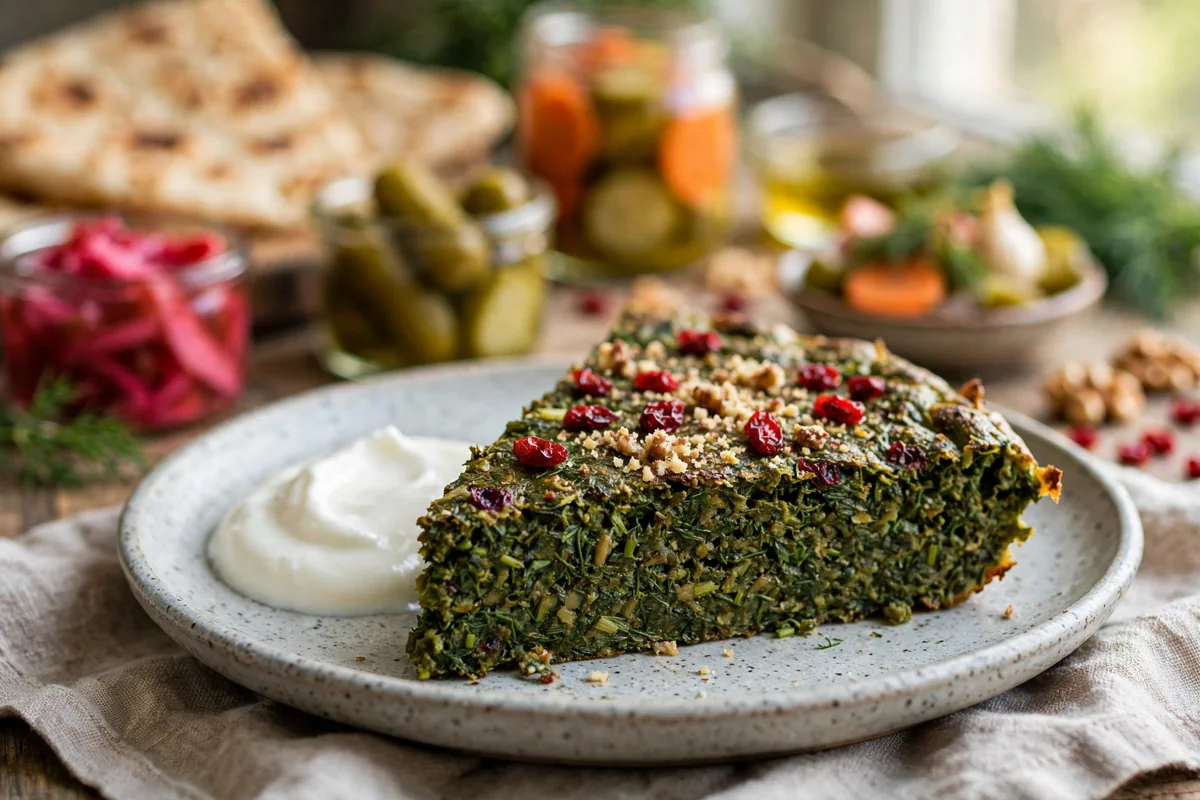
Kuku sabzi is rarely eaten alone. In Persian households it shows up with flatbread, yogurt, and pickles. It works at room temperature, which makes it good for gatherings. Cut it into small diamonds and put it on a platter with radishes and fresh mint.
For a meal, pair it with rice and a simple cucumber-tomato salad. The herbs are already doing the heavy lifting, so the sides can stay plain.
Swaps That Actually Work
- No barberries: Dried cranberries work but are sweeter, so use 2 tablespoons instead of 3.
- No fresh dill: Use 2 tablespoons of dried dill. The flavor will be milder but still recognizable.
- Gluten-free: Swap the all-purpose flour for rice flour, 1:1. No other changes needed.
- No walnuts: Toasted sesame seeds, as noted above.
Storage and Reheating
Refrigerate in an airtight container for up to 4 days. Most Persian households serve kuku sabzi at room temperature, so just let slices sit out for 20 minutes. To serve warm, reheat in a 300°F oven for 8 to 10 minutes. It also freezes well: wrap individual slices tightly and freeze up to 2 months, then thaw overnight in the fridge.
FAQs
Can I make kuku sabzi ahead of time?
Yes. It keeps 4 days in the fridge and is traditionally served at room temperature, so it is one of the better make-ahead egg dishes. Bake it, cool it, wrap it, and slice before serving.
Why did my kuku fall apart when I cut it?
Usually wet herbs or undercooking. The herbs must be dry, and the center must be fully set before you cut. Let it rest the full 5 minutes in the pan, since it firms up as it cools.
What is the difference between kuku sabzi and a frittata?
The ratio. A frittata is mostly egg with some filling. Kuku sabzi is mostly herbs with just enough egg to bind them. It is denser, greener, and holds its shape in clean slices.
Where do I buy barberries?
Middle Eastern grocery stores carry them as zereshk, usually in the dried fruit section. They are also easy to find online. Once opened, they keep for months in a sealed bag.
Easy Chicken Recipes • Official Card
Kuku Sabzi (Persian Herb Frittata)
☆☆☆☆☆0.0 (0 reviews)•Recipe by Cooking With Guru Editorial Team•Updated: Oct 15, 2026
Kuku sabzi flips the frittata ratio: it is mostly fresh herbs held together with just enough egg, studded with tart barberries and crunchy walnuts. Deep green, savory, and ready in about 35 minutes.
Prep Time15 mins
Cook Time20 mins
Total Time35 mins
Calories205 kcal
Adjust Servings:
6
Ingredients
Click to check off2 cups Flat-Leaf Parsley(finely chopped, packed, stems removed)
1 1/2 cups Fresh Cilantro(finely chopped, packed, stems removed)
1 cup Fresh Dill(finely chopped, packed)
1 cup Baby Spinach(finely chopped, packed)
1/2 cup Green Onions(thinly sliced, green and white parts)
6 piece Large Eggs(room temperature)
2 tbsps All-Purpose Flour(use rice flour to keep it gluten-free)
1/2 tsp Baking Powder
1 tsp Ground Turmeric
3 tbsps Dried Barberries(zereshk, rinsed and patted dry)
40 g Raw Walnuts(roughly chopped, about 1/3 cup)
1 piece Garlic(grated, 1 clove)
3/4 tsp Fine Sea Salt
1/4 tsp Black Pepper(freshly ground)
3 tbsps Neutral Oil(avocado or light olive oil, for the pan)
Equipment Needed
- 10-inch oven-safe skillet with lid
- large mixing bowl
- whisk
- spatula
- salad spinner or clean towels
- cutting board
- chef's knife
Instructions
Step-by-StepWash the parsley, cilantro, dill, and spinach, then spin or pat them completely dry. Chop everything finely until you have a dense pile of herbs.
Whisk the eggs in a large bowl until the yolks and whites are fully combined and slightly frothy.
Whisk the flour, baking powder, turmeric, salt, and pepper into the eggs until smooth.
Fold in the chopped herbs, green onions, garlic, barberries, and walnuts. Stir until every leaf is coated in egg.
Heat the oil in a 10-inch oven-safe skillet over medium heat until it shimmers.
Spread the herb mixture into the skillet in an even layer and press it down gently with a spatula. Reduce the heat to medium-low, cover, and cook for 10 minutes.
Slide the skillet under the broiler for 3 to 4 minutes, until the top is set and lightly golden in spots.
Let the kuku rest in the pan for 5 minutes, then slide it onto a board and cut into wedges or diamonds.
Nutrition Facts (per serving)
Calories205 kcal
Protein9g
Carbs7g
Fat16g
Fiber3g
Sugar2g
Sodium310mg
CWG
Recipe Source
The Cooking With Guru Team
Our recipes are developed and checked by the Cooking With Guru team. Nutrition figures are estimates calculated from USDA data, and yields scale with the built-in portion tools so the recipe fits your kitchen.
More breakfast recipes to try!
🍽️
Turkish Menemen: One-Pan Eggs in Spicy Tomato Sauce
🍽️
High-Protein Cottage Cheese Egg Bake with Spinach
🍽️
Easy Chicken Congee Recipe with Crispy Garlic and Chili Oil
Comments & Questions (0)
Join the conversationNo comments yet!
Be the first to leave a comment or ask a question about Kuku Sabzi (Persian Herb Frittata).